Let's be real for a second. You're tired of being stuck in a dead-end job, watching others build wealth while you're barely getting by. Maybe you've been scrolling through job listings, seeing those financial services positions that pay $60K+ but feeling like they're out of reach because you don't have "experience."
Here's the truth: The financial services industry is desperately looking for motivated people, and they're willing to train the right candidates from scratch. You don't need a finance degree or years of Wall Street experience to break into this field and start building the career you deserve.
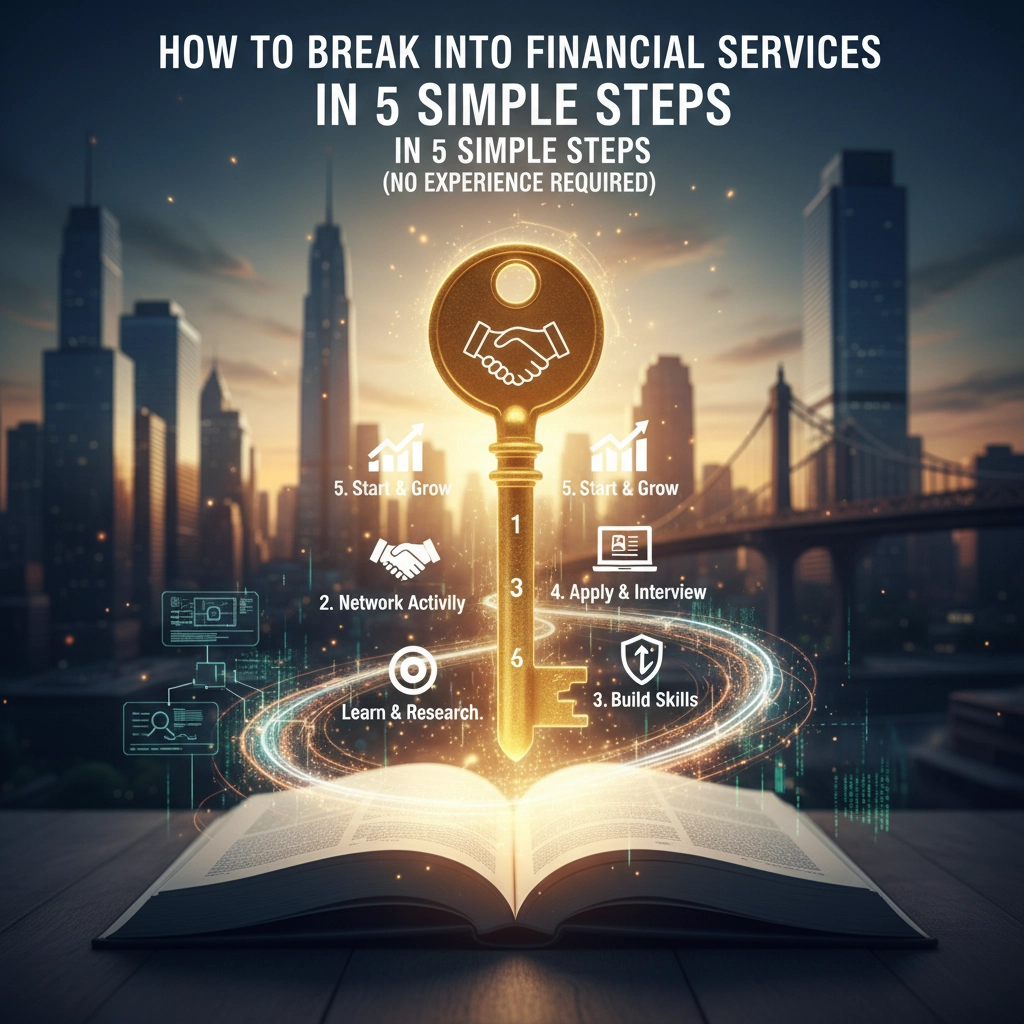
Ready to transform your earning potential? Let's dive into the exact 5-step roadmap that's helping ordinary people land extraordinary opportunities in financial services.
Step 1: Get Crystal Clear on Your "Why" and Research Your Target
Before you send out a single application, you need to answer one crucial question: What's driving you to financial services? This isn't just some fluffy self-help exercise – your "why" will be the foundation that carries you through interviews, training, and those first challenging months on the job.
Are you motivated by:
- The opportunity to help families secure their financial future?
- The potential for unlimited income growth?
- The flexibility of remote work opportunities?
- Building a business that can create generational wealth?
Once you've nailed down your motivation, it's time to explore where you fit best in this massive industry. Financial services isn't just one thing – it's wealth management, life insurance, investment advisory, banking operations, debt management, and so much more.

Here's your action step: Spend 30 minutes researching different roles on sites like Indeed, LinkedIn, and company career pages. Look for patterns in job descriptions. What skills keep showing up? What responsibilities excite you most?
Pro tip: Follow industry news for just 15 minutes a day. When you can discuss current market trends or recent regulatory changes in an interview, you'll stand out from candidates who just want "any job in finance."
Step 2: Build Your Skill Arsenal (It's Easier Than You Think)
Here's where most people get overwhelmed and give up. They think they need to become a financial expert overnight. Wrong. You need to build the right combination of technical knowledge and people skills that employers actually care about.
Technical Skills That Matter:
- Basic financial terminology (don't worry, you'll pick this up faster than you think)
- Spreadsheet proficiency (Excel or Google Sheets – start with YouTube tutorials)
- Customer relationship management (CRM) software basics
- Understanding of insurance products and investment concepts
People Skills That Pay:
- Active listening (this is HUGE in financial services)
- Clear communication (can you explain complex topics simply?)
- Problem-solving mindset
- Genuine desire to help others

Your 30-day skill-building challenge: Pick one technical skill and one people skill to focus on each week. Use free resources like Khan Academy for financial concepts, practice Excel through Microsoft's free training, and work on your communication by explaining financial topics to friends or family.
Remember: You're not trying to become a CFP or CFA overnight. You're building enough competency to prove you can learn and grow in the role.
Step 3: Network Like Your Future Depends on It (Because It Does)
Networking isn't about being fake or pushy – it's about building genuine relationships with people who can open doors for you. In financial services, who you know can be more important than what you know, especially when you're starting with limited experience.
Here's your networking game plan:
Start with your existing circle. You'd be amazed how many people have connections in financial services. Tell everyone – friends, family, former colleagues, your barber, your neighbor – that you're exploring opportunities in finance. Ask if they know anyone in the industry who might be willing to have a 15-minute conversation with you.
Get active on LinkedIn. This isn't optional. Update your profile, start commenting on financial services posts, and connect with professionals in your target companies. Don't pitch yourself immediately – engage with their content, share insights, and build relationships.
Attend local meetups and virtual events. Most cities have financial planning association meetings, insurance agent meetups, or investment club gatherings. Show up, listen more than you talk, and follow up with people you meet.

The magic phrase: "I'm exploring a career transition into financial services and would love to learn from someone with your experience. Would you be open to a brief 15-minute call?" Most professionals are happy to share their journey and advice.
Track your networking efforts. Keep a simple spreadsheet of people you've connected with, when you last spoke, and any follow-up actions. Consistent follow-up is what separates serious candidates from dreamers.
Step 4: Get Your Hands Dirty with Real Experience
This is where the rubber meets the road. You can study financial concepts all day, but employers want to see that you can apply knowledge in real-world situations. Here's how to get that experience without already having the job.
Internship opportunities are gold, even if you're not a college student. Many companies offer internships to career changers. Don't let pride stop you from taking an unpaid or low-paid internship if it gets you in the door at a quality company.
Entry-level positions to target:
- Customer service representative at financial institutions
- Licensed insurance agent trainee (many companies provide full training)
- Investment representative assistant
- Bank teller or personal banker
- Financial planning assistant
Here's the key: Many companies will hire you based on potential and provide complete training and licensing support. They'd rather train someone with the right attitude than try to fix someone with bad habits.

Be willing to start at the bottom. That entry-level position making $35K could be $65K+ within 18 months if you prove yourself and get properly licensed. Think of it as paid training for your new career.
Volunteer opportunities can also provide valuable experience. Offer to help friends or family members with basic financial planning, volunteer with nonprofit financial literacy programs, or assist elderly community members with insurance questions.
Step 5: Get Licensed and Keep Learning (This Never Stops)
In financial services, credentials matter. Not because they make you smarter, but because they show clients and employers that you're serious about the profession and legally qualified to provide advice.
Start with these foundational licenses:
- Securities Industry Essentials (SIE) Exam – This is your entry point
- Series 6 or Series 7 – Depending on your target role
- Life Insurance License – Required in most states for insurance sales
- Series 66 – For investment advisory work
The beautiful part? Most employers will pay for your licensing and provide study materials. Some even guarantee your salary while you're studying and getting licensed.
Keep your knowledge current by:
- Following financial news daily (15 minutes with MarketWatch or Bloomberg)
- Reading one financial services book per month
- Listening to industry podcasts during your commute
- Attending continuing education webinars and conferences

Pro tip: Start studying for your SIE exam before you even land a job. Having this certification already completed makes you immediately more attractive to employers and shows you're serious about the career change.
Your Next Move: Stop Waiting, Start Acting
Look, reading this article won't change your financial future – but taking action on these steps will. We've laid out the exact roadmap that hundreds of people have used to break into financial services and build careers that most people only dream about.
The question isn't whether you can do this (you absolutely can), but whether you're ready to put in the work over the next 3-6 months to completely transform your career trajectory.
Your 48-hour action plan:
- Define your "why" and research target roles (2 hours)
- Start your LinkedIn networking outreach (30 minutes daily)
- Sign up for one skill-building resource (30 minutes to choose, ongoing study)
- Apply to 3 entry-level positions (even if you don't feel "ready")
- Begin studying for your SIE exam (order study materials today)
Ready to take the leap? The financial services industry is waiting for motivated people like you. Your future self will thank you for starting today instead of waiting for the "perfect" moment that never comes.
The opportunity is here. The roadmap is clear. Now it's time to build the career and income you deserve.
